
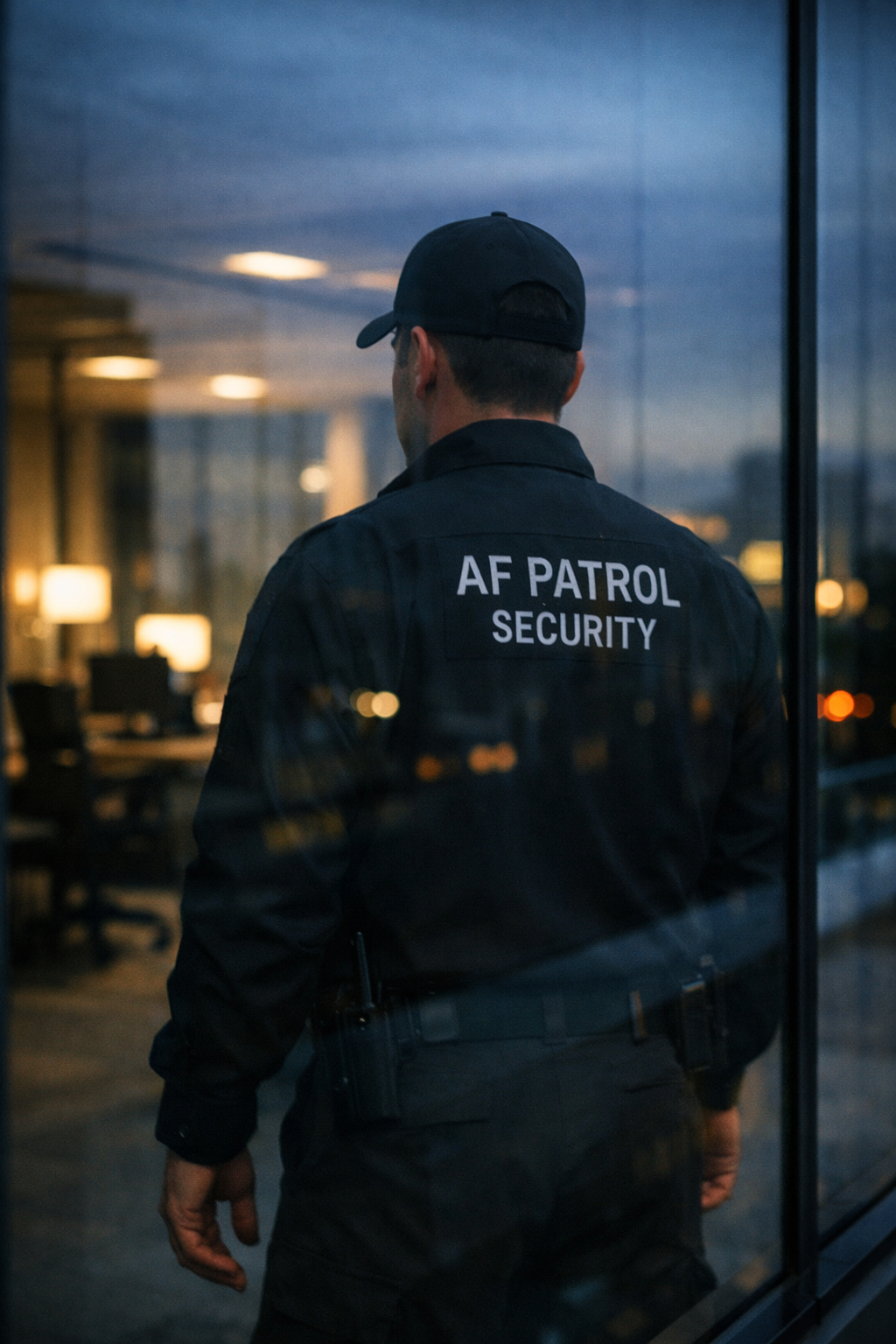
Security has changed.
And if it hasn’t changed for a business yet, that usually means it’s behind.
In 2026, proactive security is no longer about simply having someone on site. It’s about foresight. Pattern recognition. Timing. And understanding how risk actually shows up in the real world, not just on paper.
The difference between reactive and proactive security is simple. One responds after something happens. The other works quietly to make sure it never does.
Proactive Security Is About Thinking Ahead
Most incidents don’t come out of nowhere.
They follow routines. They happen during predictable windows. After hours. During low activity periods. When properties feel quiet and unobserved.
Proactive security starts by asking better questions.
When does risk increase
Where does visibility drop
What patterns repeat
Instead of waiting for an alarm or a report, proactive security focuses on reducing opportunity before it turns into an incident.
That shift in mindset is what defines modern security.
Why Reactive Security No Longer Works
Reactive security waits for something to go wrong.
A door is forced. Equipment is damaged. Someone gains access who shouldn’t have.
By the time a response happens, the cost is already there. Financial loss. Delays. Stress. Liability.
In 2026, businesses expect more. They expect security teams to understand timing, behavior, and environment. They expect prevention, not paperwork after the fact.
Reactive security documents problems.
Proactive security reduces them.
What Proactive Security Looks Like Day to Day
Real proactive security doesn’t look dramatic.
It looks consistent.
It means patrol schedules that align with high risk hours, not convenience.
It means visible presence when properties are most vulnerable.
It means officers who notice when something feels slightly off, even if nothing has technically happened yet.
Proactive security is built on small observations made consistently over time. Changes in lighting. Movement patterns. Access points being used differently than usual.
These details are easy to miss. They are also where prevention starts.
Timing Is the Most Underrated Part of Security
One of the biggest mistakes businesses make is focusing on coverage instead of timing.
Crime doesn’t happen evenly throughout the day. It clusters around quiet hours, repeated routines, and predictable gaps.
Proactive security in 2026 prioritizes presence during those moments. It recognizes that the right patrol at the right time is far more effective than constant but unfocused coverage.
Timing is not an afterthought.
It is the strategy.
Why Proactive Security Matters in Orange County
Orange County is not one environment.
Each area has its own rhythm, foot traffic patterns, and risk profile.
What works for a busy commercial center does not apply to a residential community. What protects an office building during the week looks different on weekends or during seasonal slowdowns.
Proactive security means understanding those differences and adjusting accordingly. It means local knowledge combined with consistent planning.
Security that does not adapt eventually fails.
Proactive Security Protects More Than Property
When security works quietly in the background, people feel it even if they never notice it directly.
Tenants feel safer. Employees feel supported. Events run smoother. Operations stay uninterrupted.
That peace of mind is the real value of proactive security. It protects reputations. It protects schedules. It protects trust.
In 2026, that level of protection is no longer optional. It is expected.
A Smarter Way to Protect What Matters
At AF Patrol, proactive security is not a trend or a talking point. It is how every patrol is planned.
We focus on timing, visibility, and prevention because that is what reduces incidents long before response is needed. Our approach is built on understanding how risk actually works, not how it looks on a checklist.
If you want to learn more about proactive security planning and what it should look like in 2026, visit our website or speak with our team.
🌐 www.afpatrol.com
📞 800 499 9553



0 Comments